Thermal and residual flea eradication in Tacoma addresses the persistent life cycle of modern flea infestations common to the damp maritime climate of the Puget Sound basin. Flea pupae produce a sticky cocoon silk that…
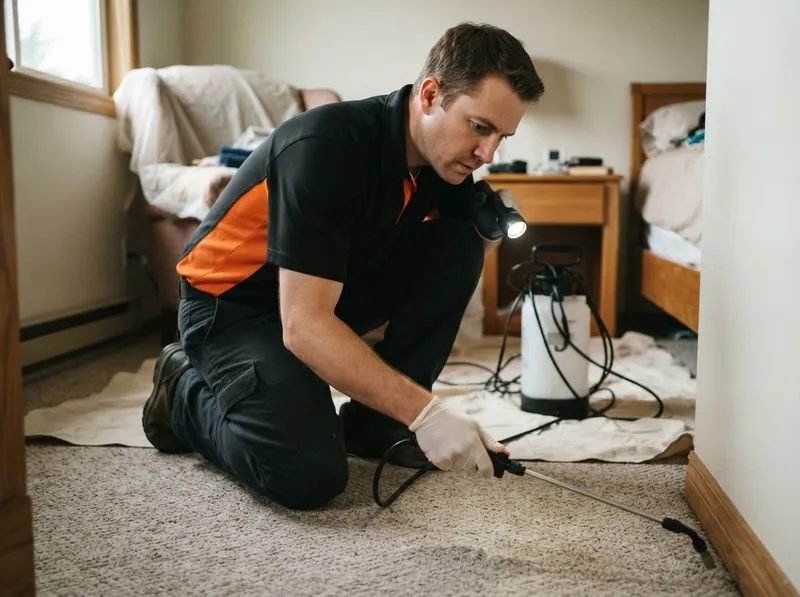
Thermal and residual flea eradication in Tacoma addresses the persistent life cycle of modern flea infestations common to the damp maritime climate of the Puget Sound basin. Flea pupae produce a sticky cocoon silk that resists ordinary broadcast aerosol sprays and conventional vacuums, resting inside deep subfloor gaps, baseboard crevices, and carpet fibers across older craft homes in the Proctor District and Stadium District. Phase one applies high-temperature dry vapor exceeding 140 degrees Fahrenheit directly to fabric seams, cushion piping, and subfloor transitions. This heat mechanism coagulates flea proteins and disrupts the moisture membrane of pupae on contact, forcing immediate reduction without saturating delicate building materials. For regional guidance on structural pest biology, review research via the WSU Extension Hortsense portal.
Phase two establishes targeted residual protection using non-repellent formulations paired with juvenile hormone mimics registered under the EPA Pesticide Programs standard. When combined with mechanical sanitation, these compounds bind to indoor surfaces to prevent remaining larvae from molting into biting adults. Technicians calibrate application equipment according to WSU Pesticide Licensing standards maintained by the Washington State Department of Agriculture. For pet owners in North End and Lincoln District properties, veterinary coordination is essential; pets should receive concurrent veterinary-grade on-animal preventatives endorsed by the American Veterinary Medical Association to prevent re-infestation from outside lawns or neighborhood parks like Wright Park.
The operational trade-off of this protocol centers on required site preparation versus chemical reduction. While thermal and residual control avoids repeated, indiscriminate whole-house chemical fogging, it requires homeowners to clear floor surfaces, wash pet bedding at 140 degrees Fahrenheit according to the CDC Flea Guidelines, and thoroughly vacuum carpet matrices to stimulate premature pupal emergence prior to arrival. Homeowners in the damp coastal environments of Old Town and West End frequently experience secondary moisture buildup that promotes flea larvae survival; maintaining indoor relative humidity below 50 percent through continuous dehumidification accelerates eradication. Guidance on ambient environmental control can be verified through the Tacoma-Pierce County Health Department and building performance parameters documented by the U.S. Department of Energy. Clearstone Pest Guard avoids long-term auto-renewal service contracts, providing standalone interventions backed by verifiable Pierce County site assessments.
Every job gets a firm, written price after a free on-site visit.
For standards, safe disposal, and service guidance on PEST CONTROL SERVICE in Tacoma, WA, useful references include U.S. EPA, ENERGY STAR, U.S. Dept. of Energy, Consumer.gov, U.S. Census Bureau, and Google Maps. General consumer and small-business resources are available from USA.gov, Better Business Bureau, FTC Consumer Advice, U.S. Small Business Administration, and Ready.gov.
Tell us about your thermal and residual flea eradication job in Tacoma and we'll send a clear, written quote, usually the same day.
 Clearstone Pest Guard